So here begins my series about the ATR that my company is getting. I will blog about this until the day they become operational with Island Air.
The first of our flt crews are back from Houston. While there they attended ATR ground school and sim training. I was originally scheduled to attend the training. Crews were in Houston for about 4 weeks, but last minute changes by senior management had us sit this session out.
So as we roll into June, we're all wondering where the ATR's are at? The word is they are now delayed and not scheduled to arrive until August. Until then, the returning check airmen are busy putting together the first ground school for those pilots who want to bid into the new aircraft type. Ground school starts 25 June. No date set for dispatcher ground school on the new aircraft. Can't wait to work with the ATR's again, but this time dispatching them.
Showing posts with label Island Air. Show all posts
Showing posts with label Island Air. Show all posts
06 June 2012

28 April 2012
Changes are afoot!
I'M BACCCKKKK! After a almost year absence from this blog, I'm finally finding the time to begin posting again. Albeit I'm doing it late at night when the baby and everyone else is asleep. Anyway, I felt now is the right time to make this blog active again. To my original "7" followers of this blog, I say thanks for sticking around. To all those who visit or just happen to see my site, I also say thanks for stopping and reading. I greatly appreciate it.
As the title suggests, things are afoot where I work at. As noted in the local media and on various aviation news blogs, my company, Hawaii Island Air are going to get a "new" aircraft type. Since our aging fleet of Dash-8-100's are getting up there in time, we have decided to invest in ATR's! The company is going ahead and getting both models, the 42's and 72's. I've worked with and on the 42 models in the early '90's with another now defunct airline and i actually love ATR-42. Not to familiar with the 72's, but I'm sure it's not much diffrence.
So, I'll be deep in the transition of this aircraft within our fltops dept so I will do a regular series on this event over the course of the change over. I'll also write about anything and everything else that goes on in dispatch as well as at HNL and in aviation as well. Look forward to writing and taking pictures again and thanks for stopping by. Look forward to your comments on my blog. Till the next post...Aloha!
As the title suggests, things are afoot where I work at. As noted in the local media and on various aviation news blogs, my company, Hawaii Island Air are going to get a "new" aircraft type. Since our aging fleet of Dash-8-100's are getting up there in time, we have decided to invest in ATR's! The company is going ahead and getting both models, the 42's and 72's. I've worked with and on the 42 models in the early '90's with another now defunct airline and i actually love ATR-42. Not to familiar with the 72's, but I'm sure it's not much diffrence.
So, I'll be deep in the transition of this aircraft within our fltops dept so I will do a regular series on this event over the course of the change over. I'll also write about anything and everything else that goes on in dispatch as well as at HNL and in aviation as well. Look forward to writing and taking pictures again and thanks for stopping by. Look forward to your comments on my blog. Till the next post...Aloha!
09 March 2011
Hide and Seek
Here's one for the dispatch files. It's a first for me.
So look at the first picture. What do you speculate as to what's going on?

Okay, so we have panels open. Maintenance personnel standing around.

A problem with the nose gear? Or an avionics issue?

Nope! None of the above. This litte guy, a 5 inch long centipede was discovered by the flight crew cralling around. It appeared while the aircraft was on the ground and scurried away before it could be caught. Maintenance was called and they started opening panels looking for it. The aircraft was fumagated and I guess that was too much for it. It came out and was quickly "dispatched"! (no pun intended!)
Well be working with the security department to see how the centipede got onboard and by-passed security!
Dispatching "Con Air"!
( For security and privacy concers, all photos displayed have been altered to protect the identites of those shown and sensitive infomation has been edited out of all photos and no specific details or information are provided ).
Island Air, has been providing flights to the State of Hawaii, Dept. of Corrections for prisoner transport more commonly known as "ConAir" since late last year. It's nothing like you think or saw in the movie. Prisoner transfer happen everyday all across the country. All are uneventful.

These flights are done and provide a controlled, safe, efficent and economical way of transporting a large number of prisoners between the neighbor islands instead of placing them on scheduled flights.
These flights normally are controlled by the Department of Corrections who advises us on which days they will need a transport and we then provide a crew and aircraft for them.

The ConAir flights are considered by Island Air Supplemental Operations conducted under Domestic Flight Rules.

Under FAR 121.537 Responsibility for Operational Control during supplemental operations, both the Captain of the flight and the Director of Flight Operations are jointly responsible for all aspects of the flight. The Dispatchers act for the Dir. of FLTOPS

As the dispatcher on duty, we monitor the flight and keep track of it. We provide a crew wth a dispatch release and current weather on the day of flight. All other aspects are routine. Crews receive a full briefing from the dispatcher. The aircraft is pre-flighted and then the crew awaits the passengers and guards for the flight.

While all transfer are done, state sherriff deputies closely oversee the operation.

From a dispatching point of view, "ConAir" flights are handled like any other flight.
It's just another day at the office.
It's just another day at the office.
22 December 2010
IMC Practice
Dispatching can be a challenge. Even on good days. But when weather sets in, it's a whole new dynamic.

 This is what the weather normally looks like around here, but as shown in the SA above, things were about to get wetter!

On the 15th of Dec, This is what The North Pacific Surface Analysis was looking like. A long Low Pressure System extending from around Midway Island in the Pacific Northwest all the way across the Central Pacific and over into CONUS.


On the ramp, rain gear is the uniform of the day as the weather makes the early morning preflights for the crews a fun one. Winds with the associated system was light and variable, so this caused having with visibility and ceilings. The wind wasn't there to keep the moisture moving so everything just "sat" around.

Later in the morning, visibility dropped to as low as 1/4 mile with +SHRA (heavy rain showers)and alot of TS (thunderstorms) in EMBD CB's (Embedded Cumulonimbus Nimbus clouds) here in HNL. We held flights going into MKK due to visibility was nearly zero. And LNY was slowly losing it's battle with the weather. Myself and the other dispatcher kept on updating the weather as quickly as it was being amended by the National Weather Service (NWS) and kept the crew well informed.
Now we know it was bad when HNL goes down below and alternates are required for the flights to return. Fuel loads were all increased for all flight outbound from HNL and inbound. By some luck when our flights were legal to depart, they all made it into their destinations on the first shot. No missed approaches occurred.
Due to the instability of the atmosphere over the Hawaiian Islands, we are looking at more continued wet weather into the Christmas weekend as another front approaches from the west.

In the mean time, it's back to blue skies and sunny weather...

...for now!!!
03 November 2010
Finishing Up the Heavy Check

So with the heavy check almost completed, maintnenace puts a new set of props on the aircraft #1 engine.
This aircraft is scheduled to return to service on 04 Nov. The #2 engine in the back awaits her new engine and set of props as well. After this, time for a run up and check out.
04 October 2010
Heavy Check!
Growing up I thought that that an aircraft lasted "forever". As a member of the traveling public, some of us think that a plane is like the family car. Check the oil, the tires and change/add fluid as necessary. On occasion, we do a monthly check on the car and get our inspections done yearly. But with an aircraft, maintenance on these winged beauties are an on going process. Currently, one of our Dash-8-100's, N805WP, is in ourhanger for a "C" Check or a heavy inspection.


N805WP "Holomua" in the hanger
The check is very extensive. Every portion of the aircraft is scrutinized. From Nose to tail. Nothing is overlooked. Rivets that hold the skin flaps are inspected. Aircraft interiors are taken out. Items needing repair or replacement are addressed. Avionics inspects and test all the instruments
#1 engine removed. Leading edge boots removed. Her seats on the hanger floor, 805's heavy check in progress
In a rarely seen area are the control cables that are linked to the control column in the cockpit. When a pilot turns the the controls one direction or another or pushes or pulls back, these cables respond by moving the control surfaces of the aircraft in relation to the input
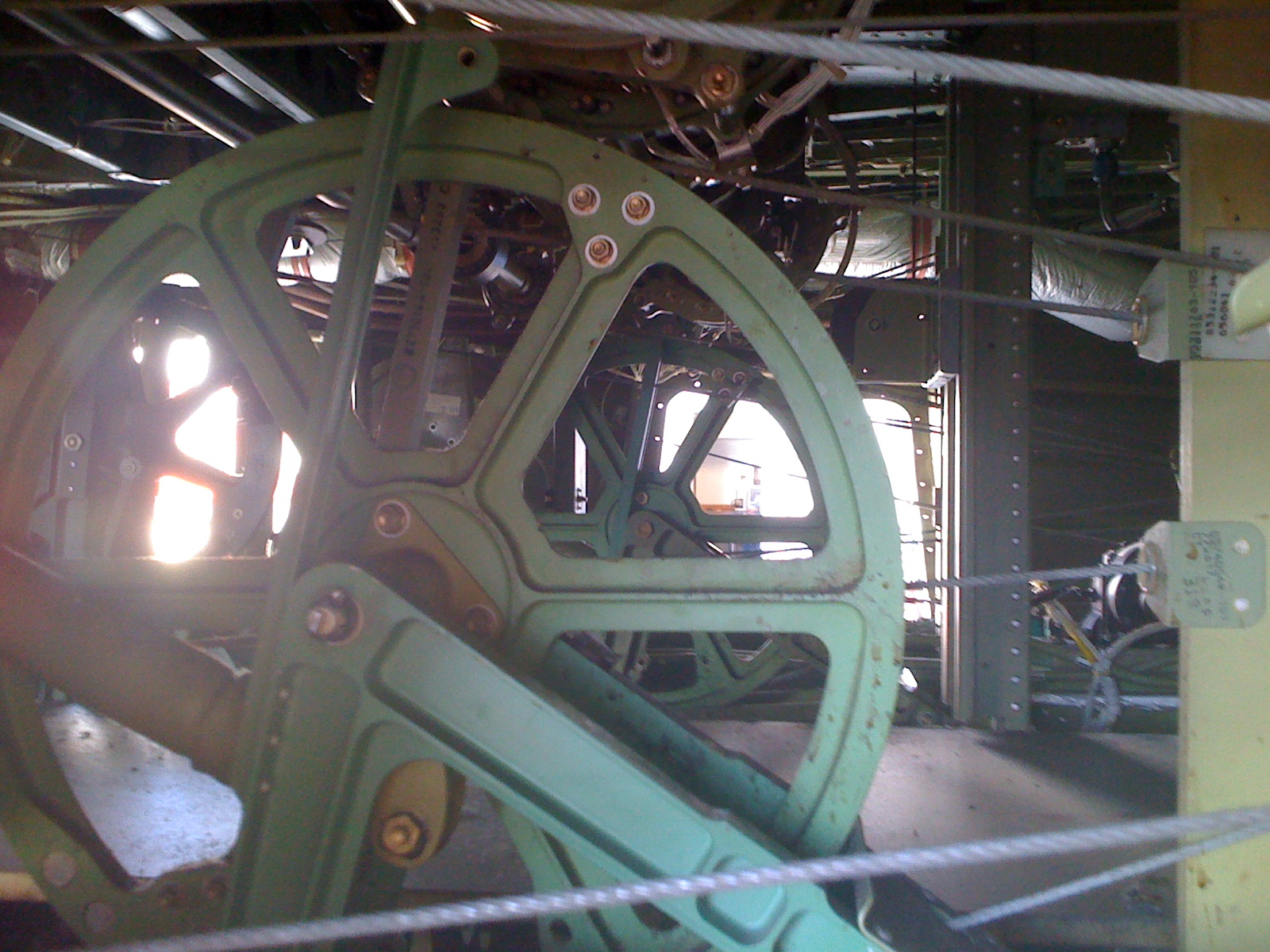
The cables run the length of the aircraft. Most aircraft have this type of configuration. The exception would be those aircraft that are "fly-by-wire" where electronic signals control the movements of the control surfaces
Looking thru the #1 engine mounting

Panels to the aircraft's rudder actuators are open and the elevator boots are missing

Looking thru the open cargo door, we can see the exposed pressure bulkhead and ducts.
The black marks on the wall to the left are from the constant scrapes of bags being placed in the hold
looking forward from the cargo door we see the cabin side panels removed for cleaning and inspection
Overhead cargo bins are still in place with the rest of the cabin covered and taped. Side panel installation is clearly visible as is the ceiling. The large opening is the under wing emergency exit
Here's another view of the cabin looking from the front to the rear cargo door area. Still alot of work to be done

Main cabin door area with the galley covered. This aircraft is st to come out of the hanger on 01 Nov. Still alot more to be done. I look forward to dispatching this aircraft again when she is done with the check. 805 is one of my favorite aircraft's
19 September 2010
BIRD STRIKE!!
Okay, so this kind of stuff happens on occasion. Areas like MKK and JHM are prone to having their fair share, perhaps more, of birds in and around the vicinity of the airport. Flying into these birds does happen. Most of the times when it does, it really a non event. Meaning that the bird takes a glancing blow either off the aircraft body or at times strikes the props and gets turned into a "flash of crimson".
But today was a little different. During the crew walk around after landing in MKK they discovered this:


But today was a little different. During the crew walk around after landing in MKK they discovered this:

The F/O was looking in the intake and found the feathers and a small blood trail leading into the intake.
So they checked the engine intake bypass and found this
(GRAPHIC PHOTOS...LOOK AT YOUR OWN RISK!!)

So, we got a birds carcass in the intake, but did ANY portion of the bird get sucked into the engine? Well, now we in dispatch pretty much ground the aircraft on MKK and get maintenance control to send an mechanic and inspector out to the aircraft on the next available flight to check. FOD or Foreign Object Damage is a serious matter and is treated that way at EVERY AIRLINE!
Two hours later...after a thorough inspection, the aircraft is released by maintenance and we can now re-dispatch the aircraft from MKK back to HNL to finish the remainder of the line, albeit 2 hrs delayed!
As for our feathered friend, well this is all that maintenance found of him...

Not much left. Not even a cat would want this as a snack!
The best thing was that no one was hurt. The plane landed safely and we didn't have to replace an engine. Even after this happened, the station's customer service was already rebooking passengers and trying to minimize the delay they would experience.
Unfortunately these things do occur and the crews are capable of handling it and the maintenance staff is capable of getting the aircraft back flight ready.
12 July 2010
Heading Home with a side of Lanai

After a short and quick 15 minute turn in JHM/PHJH, we depart for HNL/PHNL.

We reach our cruising altitude for the 32 minute flight back. Nothing to look at during this flight because of the clouds below us at FL050. On this flight, we fly in the channel north of the island of Lanai (LNY/PHNY) and south of Molokai. Normally it's a great flight to see the middle islands, not today.

At 30 miles out we call the field as we are cleared down to FL025. The clouds around Honolulu are now mainly over the mountains with some high broken to overcast over the south shore. HNL tower clears us for the visual on the "channel approach" which is we fly towards the entrance to Pearl Harbor then make a visual right turn from base to runway 8L. This approach is favored by all the interisland pilots because of its close proximity to the taxiways that lead to the interisland ramp.

We start our turn to final for 8L. Since HNL is a shared field with Hickam/Pearl Harbor Air Base (combined field now for the military), it affords some great views of Pearl with the Arizona Memorial and the USS Missouri in the distance and the Hickam flight line.

Showers again over Keehi Lagoon 2 miles away but noticeably HNL had some rain as to the sheen of water on 8L as we continue our landing.

After the landing, we get nailed by the rain that we saw as we taxied in to the gate.
20 minutes later were on the go again heading back to MKK and LNY.

WOW! what a difference 20 minutes make. The sun is now shining over the south shore of Honolulu. The tourist are getting their money's worth now that the rain has passed and the beaches are sunny. Ala Moana Beach Park is visible as the long stretch of sandy beach in the foreground with famous Diamond Head in the distance.

This leg goes to Molokai first, and since I covered that in Part one of this blog, I'm skipping to Lanai.

The approach to the airport starts on the south side of the island. The first thing you notice is the cliffs on the south shore. Rising 500 feet above the sea, it's both beautiful and imposing.

LNY was originally owned by the Dole Company and was nicknamed for many years "The Pineapple Island". That's because of most of the flat level land from the south shore cliffs to the town of Lanai was covered with Pineapple fields. A good portion of the pineapples that were shipped around the world came from Lanai. With changing times, labor cost for growing pineapples became more expensive, so after the fields had grown their last crop, they were left vacant. David Murdoch purchased the island from Dole and now his company, Castle & Cooke, runs the island and has developed two world class resorts to replace agriculture as the sole source of island income for its residents who were left without jobs when Dole pulled out of the island.

On glideslope...Lanai is one of those fields that you can have strong winds to low ceiling and visibility in a rather short time. The airport sits about 600 feet ASL and because of the mountains in the north, east and west sides, can cause clouds to "sit" in what we refer to as "the bowl".

Welcome to bright and sunny Lanai!

We depart Lanai and within a short 30 minute flight were back in Honolulu. This is the approach to 4R which takes us over 8R/26L better known as the "Reef Runway".

After landing we taxi to via "Bravo" taxiway to cross 8L/26R at "Golf". We wait while an American Airlines 757 lands. just behind the tail taxing up to the interisland terminal is Hawaiian Airlines new Airbus. Just one more round trip and I'm done for the day.
Hope you enjoyed this little series. Thanks for reading!
16 June 2010
The Short Hop!
So on to the next destination , Kapalua-West Maui or just Kapalua Airport (JHM/PHJM). The rain that was north of the field in Molokai still held there as we departed. As we begin our departure, with the standard left climbing turn to FL050, thence to the VOR heading 100 degrees to BOGEE INT.

We start to board our flight for the departure from MKK.

As you can see the clouds which are now covering the interior of Molokai to the left and extending east as we climb thru FL020 to our cruise altitude of FL050 (this portion of the flight is only 15 min long from block to block)

We continue eastward flying over Kaunakakai and the wharf (It's that little piece of land just at the very middle bottom of the F/O's window). The crew is busy at this point being as we are about to go IMC.

Though directly in front is in overcast conditions, just south of Molokai, the channel is clear and you can see Lanai island.

The overcast conditions that await us over West Maui. The mountains of east Molokai are to the left of us and shrouded in heavy clouds and rain.

"In the soup". We are now IMC and established on the 100 degree heading to BOGEE INT which is about 3 minutes away.

Here's the approach procedure into JHM.

At 24.4 DME and about FL029 from the MKK VOR we start to break out of the clouds.

As we get lower and closer, the coast line becomes visible. The approach into JHM is a rather tricky one for the crews. For noise abatement, aircraft must cross the shoreline no lower than 1800 ft. Only upon crossing the shore line may the turn from base onto final begin. So this almost seems to like your diving into the airport.

Approaching the shore line the field is visible thru the rain just near the right edge of the window.

Crossing the shoreline and turning onto final for RWY 02.

Established on final. RWY 02 just ahead on the edge of the rain.
One thing about the approach into JHM is that the runway is on 3000 ft long. There are ravines on either end of the runways. The winds are usually always a direct crosswind which includes wind shear on the short final. When I was a flight attendant, I used to tell passengers that landing in Kapalua was like landing on the deck of an aircraft carrier. Quick, violent and unforgettable!
Fifteen minutes after departing Molokai, here we are in a rainy Kapalua-West Maui.
Subscribe to:
Posts (Atom)